CPAP Mask Rash: Causes, Prevention, and What to Change First
Physician Article
Dr. Brian Harris
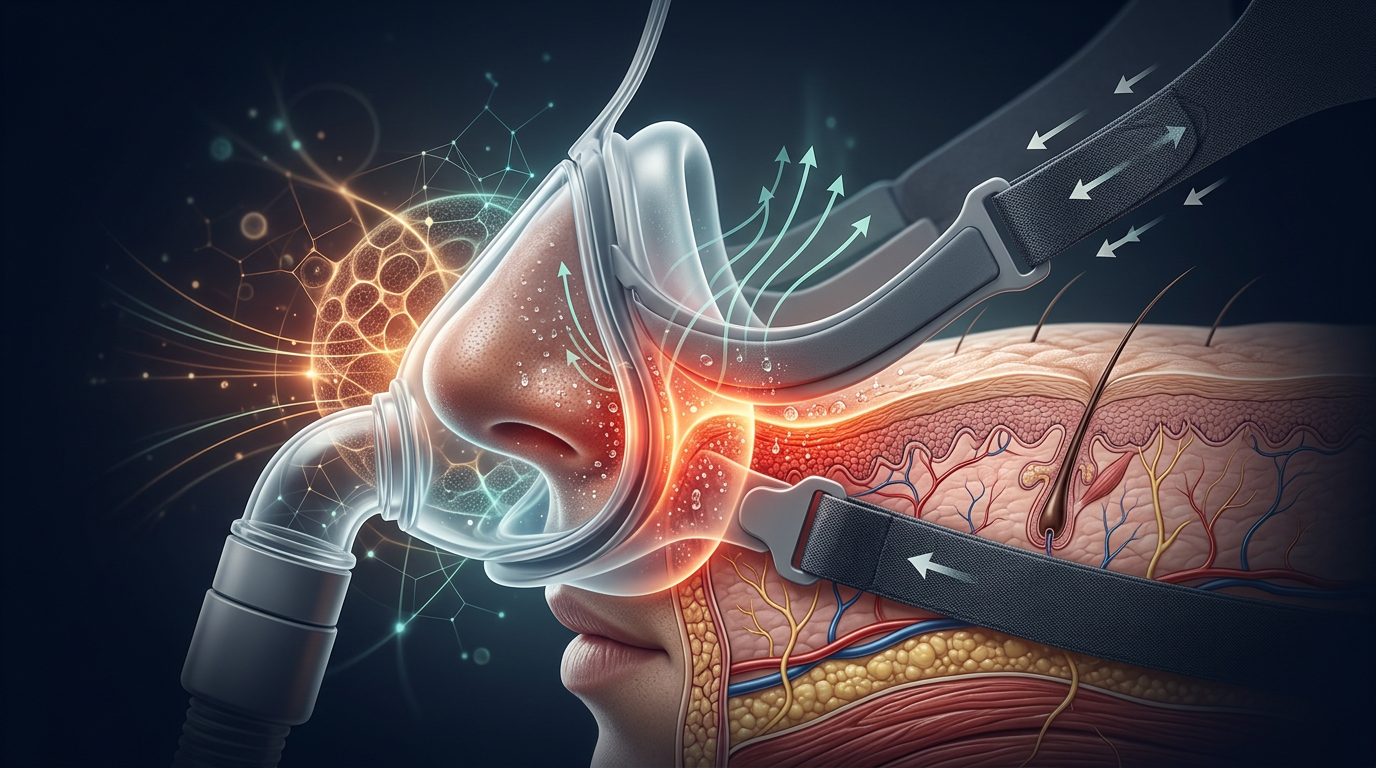
Why this matters
CPAP only works if you can wear it. Skin irritation is one of the fastest ways to turn a useful therapy into a nightly argument with yourself. Most CPAP-related rashes are not "allergies"—they are mechanical problems caused by fit, friction, or moisture. If your skin is angry, the solution is usually a change in setup, not a reason to quit.
In plain language
If you’re waking up with red marks, sore spots, or breakouts under your mask, your skin is reacting to the humid environment and pressure.
- Check the Fit: The #1 cause of rash is over-tightening the straps. A mask should "float" on your face, not be crushed against it.
- Keep it Clean: Skin oils and makeup residue trapped under the mask will irritate your pores. Wash your face *and* the mask cushion before bed.
- Moisture Control: If your face is too sweaty or the machine's humidity is too high, it can lead to a dampness rash.
Sometimes, switching from a full-face mask to "nasal pillows" (which touch less of your skin) is the ultimate fix.
Clinical deep dive
CPAP-related skin pathology is usually a form of Contact Dermatitis (irritant or allergic) or Pressure Ischemia.
Diagnostic Patterns
1. Irritant Contact Dermatitis: Caused by the accumulation of sweat, sebum, and bacterial byproducts under the mask cushion. Manifests as erythema and follicular papules. 2. Pressure Ulceration: Usually occurs at the bridge of the nose or the malar eminences. This is a mechanical failure where strap tension exceeds capillary perfusion pressure. 3. Allergic Contact Dermatitis: Rare, but can occur in response to silicone, dyes, or cleaners used on the equipment.Management and Mitigation
- Interface Optimization: Utilizing mask liners (cotton/silk) to absorb moisture and reduce direct skin contact with the cushion.
- Pressure Management: Switching to a "Minimal Contact" interface (nasal pillows or sub-nasal cushions) to offload the nasal bridge.
- Topical Barriers: Using non-petroleum based barriers (like barrier creams or specific CPAP-safe moisturizers) can reduce friction.