Excessive Daytime Sleepiness: Why It Matters
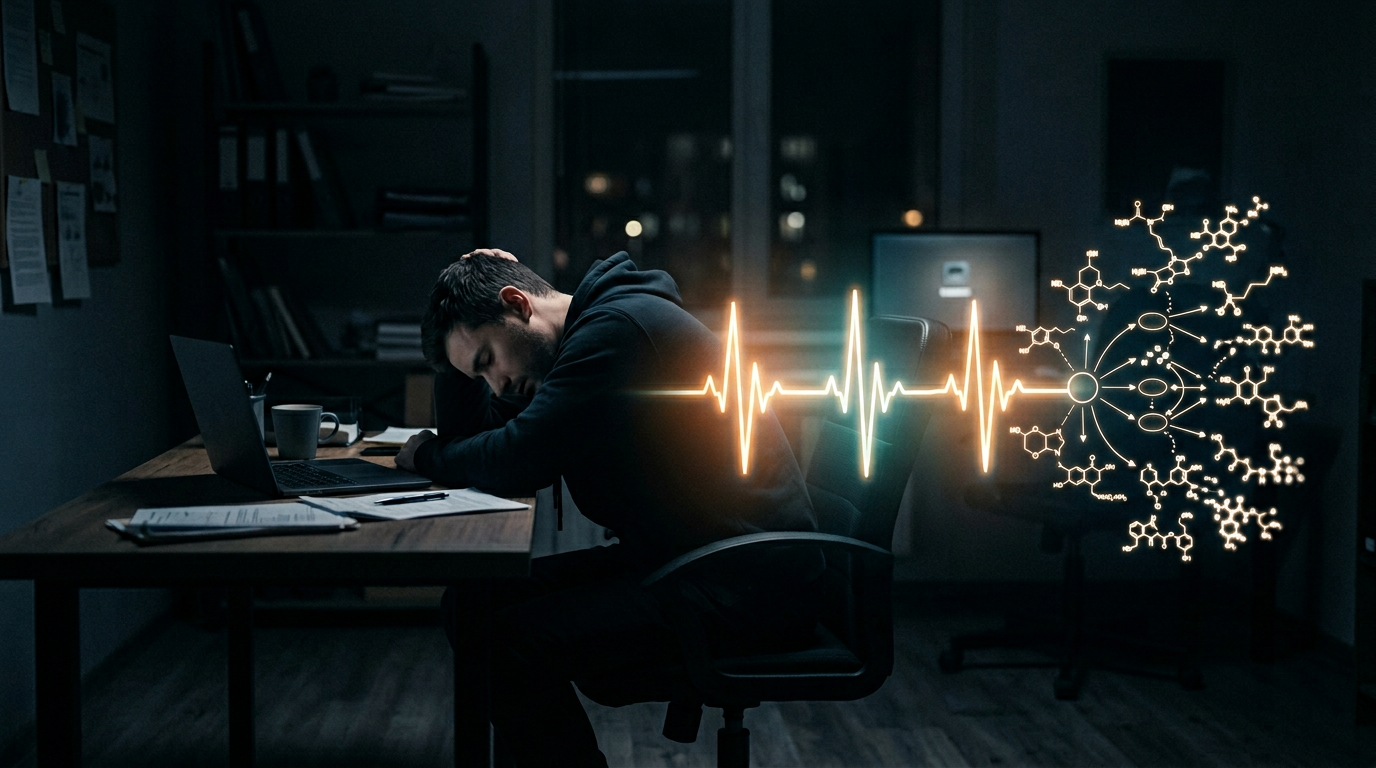
People tend to treat daytime sleepiness as a personality problem until it becomes a safety problem. Significant sleepiness is not just “feeling a little tired.” It affects attention, memory, reaction time, judgment, mood, and safety. If it is severe enough, it can impair driving, work performance, and routine decision-making in ways that become obvious only after something goes wrong.
We often normalize being tired as a part of modern life—burnout, parenting, or too much coffee. But there’s a big difference between being "exhausted" (low energy) and "sleepy" (a physical tendency to doze off).
If you find yourself nodding off during quiet moments—like reading, watching a movie, or worse, sitting at a red light—that is Excessive Daytime Sleepiness (EDS). It’s a medical clue, not a character flaw. It often means your sleep isn't restorative, whether because you're not getting enough hours or because a disorder like sleep apnea is interrupting your rest. If you're giving yourself 7+ hours of sleep and still feel like you're fighting to stay awake, it’s time for a methodical workup.
Excessive Daytime Sleepiness (EDS) is defined as the inability to maintain a desired level of wakefulness or alertness during the day, resulting in unintended lapses into sleep. It is a symptom, not a diagnosis, and requires a rigorous differential workup.
Clinical Anchors for EDS
- Doze Frequency: Unintended sleep episodes during sedentary activities (e.g., meetings, driving).
- Epworth Sleepiness Scale (ESS): A score >10 indicates clinically significant sleepiness.
- Sleep Attacks: Sudden, overwhelming urges to sleep, characteristic of central disorders of hypersomnolence.
Pathophysiology and Differential
EDS typically arises from one of four mechanisms: 1. Insufficient Sleep Syndrome: Chronic sleep restriction (Process S debt). 2. Fragmented Sleep: Disruptions in sleep architecture due to Sleep Disordered Breathing (OSA), Periodic Limb Movements (PLMS), or environmental factors. 3. Circadian Misalignment: Shift work or jet lag (Process C disruption). 4. Primary Hypersomnolence: Neurological inability to maintain wakefulness (Narcolepsy, Idiopathic Hypersomnia).Clinically, EDS must be distinguished from fatigue (a subjective sense of exhaustion/lack of energy without the propensity to sleep). While fatigue is common in medical conditions like anemia or depression, EDS specifically points toward primary sleep pathology or chronic sleep deprivation.