Sleep Restriction: Why Less Time in Bed Can Help
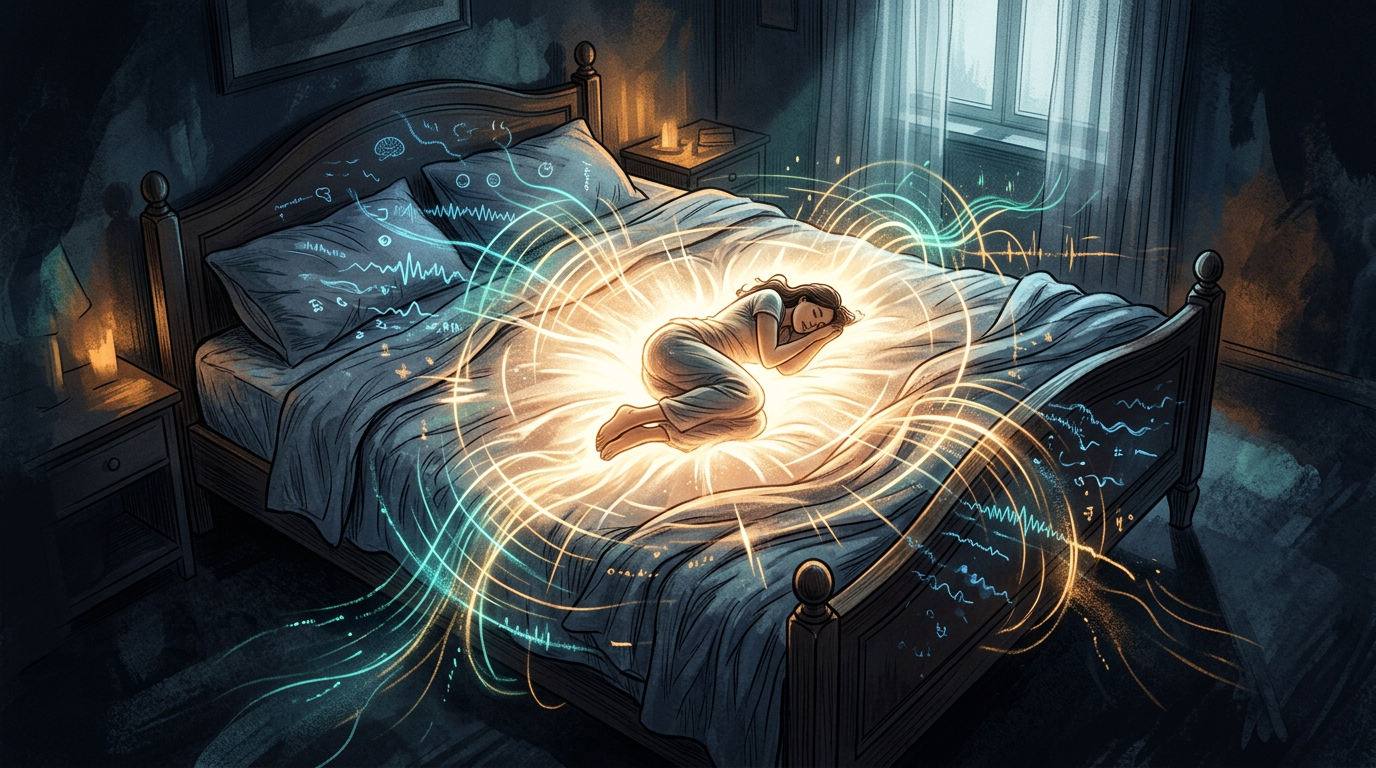
Telling an exhausted insomniac to spend less time in bed sounds somewhere between rude and deranged. It also happens to be one of the most effective parts of insomnia treatment. The goal isn't to deprive you of sleep; it's to eliminate the "dead time" spent awake and frustrated in bed.
When you can't sleep, you probably try to "catch up" by going to bed early or sleeping in. This feels like the right thing to do, but it actually makes your sleep shallower and more broken. You end up "practicing" being awake in bed.
Sleep Restriction works by matching your "time in bed" to the actual amount of sleep you are currently getting. If you only sleep 6 hours a night but spend 9 hours in bed, we shorten your window to 6 hours. This builds up "sleep pressure"—the natural drive to sleep—so that when you *do* hit the pillow, your brain is ready to drop off and stay out. As your sleep becomes more solid and efficient, we gradually expand the window back out.
Sleep Restriction Therapy (SRT) is a counterintuitive but potent behavioral intervention that targets homeostatic sleep drive and sleep fragmentation.
The Homeostatic Mechanism
SRT leverages Process S (the homeostatic sleep drive). By restricting the sleep opportunity, we increase the concentration of adenosine in the brain, thereby increasing sleep pressure. This leads to:- Decreased Sleep Onset Latency (SOL).
- Decreased Wake After Sleep Onset (WASO).
- Increased Sleep Efficiency (SE).
- The Anchor: The wake-up time is set as a non-negotiable anchor to stabilize the circadian rhythm (Process C).
- Expansion: Once the patient achieves a sleep efficiency (TST/TIB) of >85–90% for a full week, the window is expanded by 15–30 minutes.
- Seizure disorders.
- Bipolar disorder (risk of triggering mania).
- Untreated Obstructive Sleep Apnea (OSA).
- Safety-sensitive occupations (e.g., long-haul trucking).