Stimulus Control: Retraining the Bed–Sleep Connection
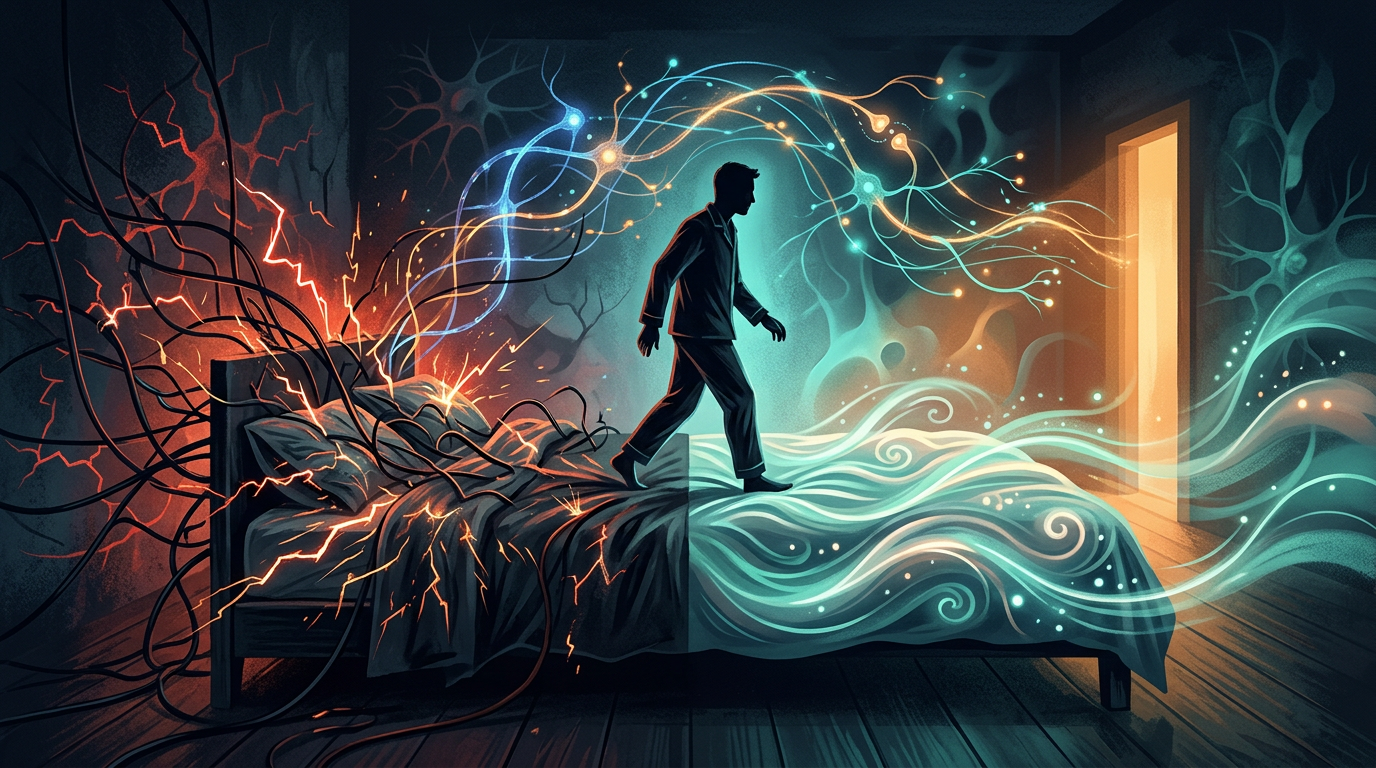
One of the quiet disasters in chronic insomnia is that the bed stops feeling like a cue for sleep and starts feeling like a stage for frustration. If your brain has learned that "bed means struggle," the answer isn't to try harder. It's to retrain the association until the bed becomes "boringly specific" again.
Your brain is a master at making associations. If you spend hours in bed wide awake, worrying or scrolling, your brain learns that the bed is a place for alertness. This is called conditioned wakefulness.
Stimulus Control is about breaking that cycle with a few simple but strict rules: 1. Bed is for Sleep and Sex only: No working, no eating, no watching TV in bed. 2. Only go to bed when you are actually sleepy: Not just because it's "bedtime." 3. The 20-Minute Rule: If you are awake and frustrated for more than 20 minutes, get out of bed. Go to another room, do something calm in low light, and only return when your eyes are heavy.
The goal is to ensure the only thing your brain knows how to do in bed is sleep.
Stimulus Control (SC) is a behavioral intervention based on classical conditioning principles. In the context of chronic insomnia, the bedroom environment (the conditioned stimulus) has become associated with hyperarousal and wakefulness (the conditioned response) rather than the unconditioned response of sleep.
The Objective of Stimulus Control
The goal is to re-establish the bed as a strong discriminative stimulus for sleep and to extinguish the association with sleep-incompatible behaviors.The Protocol (Bootzin Rules)
- Strengthening the Association: Restricting bed activities to sleep and intimacy only.
- Wait for Drowsiness: Reinforcing the homeostatic signal by ensuring the patient is "sleepy" (subjective drowsiness) rather than merely "tired" (fatigue) before attempting sleep.
- Breaking the Cycle of Frustration: Removing the patient from the bed when sleep does not occur within ~20 minutes. This prevents the reinforcement of hyperarousal and clock-watching. The patient returns only when the "drowsiness" signal returns.
- Circadian Stabilization: Maintaining a consistent wake time and avoiding daytime naps to preserve the homeostatic sleep drive for the night.